Product Updates
Thought Partner Chat: How it works behind the scenes
Discover the 6 mechanisms behind the most reliable research AI
Jack Bowen, Co-Founder & CEO · · 2 minutes read

Every researcher can relate to this: an AI tool generates a perfect summary for your project... and then you check the citations. A quote that doesn't quite match. A "majority view" held by three participants. A clean theme that flattens the hours you spent surfacing disagreement in the room.
We spent a month, on-site with research teams, and surveyed over 200 more. The direction came back loud and clear: analytical AI has to go deeper, hold a higher bar for rigor, and make every insight easy to validate.
That's why we built the new Thought Partner Chat.
Every insight grounded in evidence you can defend. The data feeding the analysis controlled with precision. Output that preserves the nuance and the depth that qual research exists to surface.
In this new instillation of our blog, we cover what happens behind the scenes: the mechanisms that make our Thought Partner Chat the most reliable AI for qualitative research.
1. Citations as a Dedicated Step
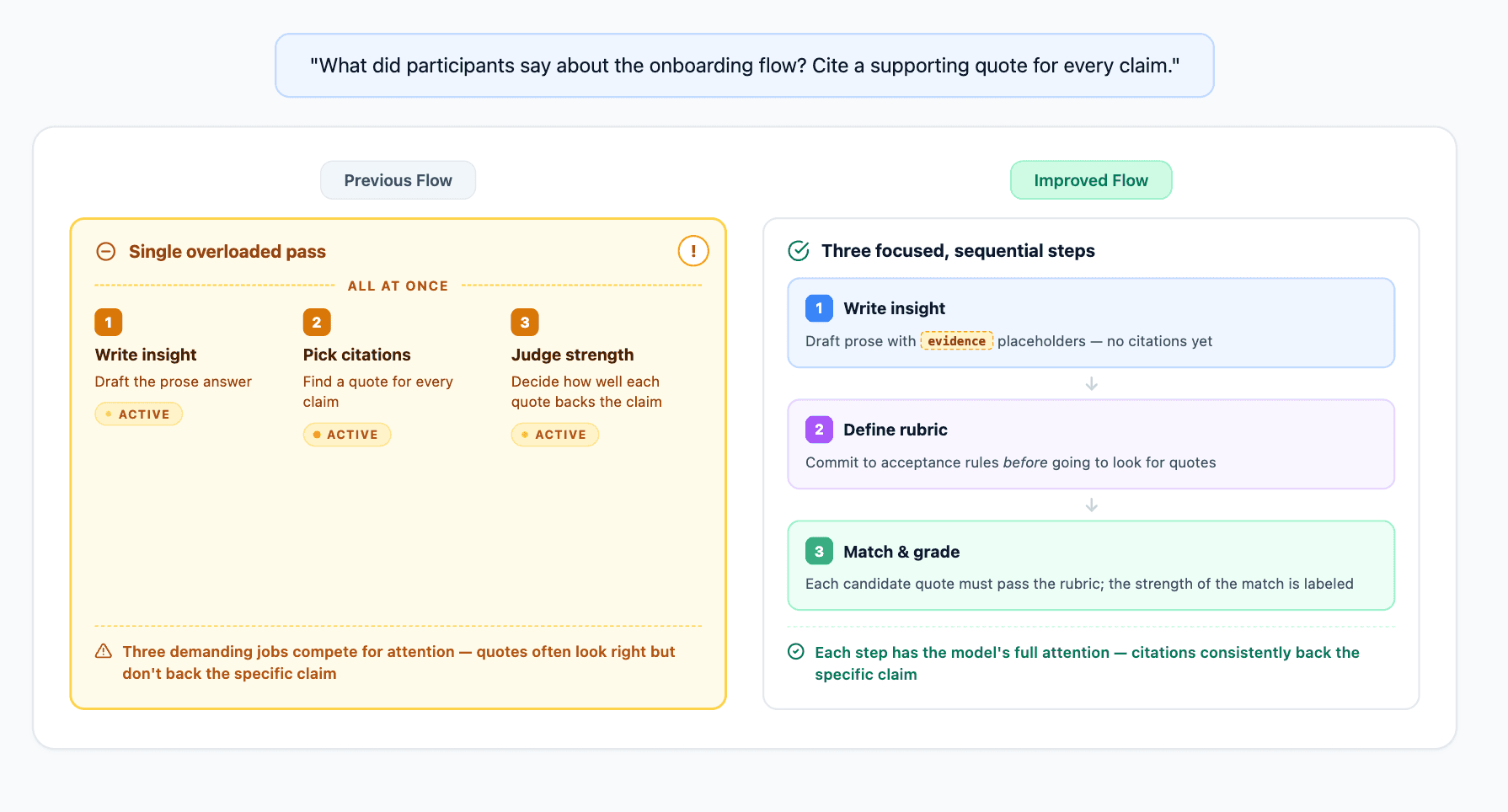
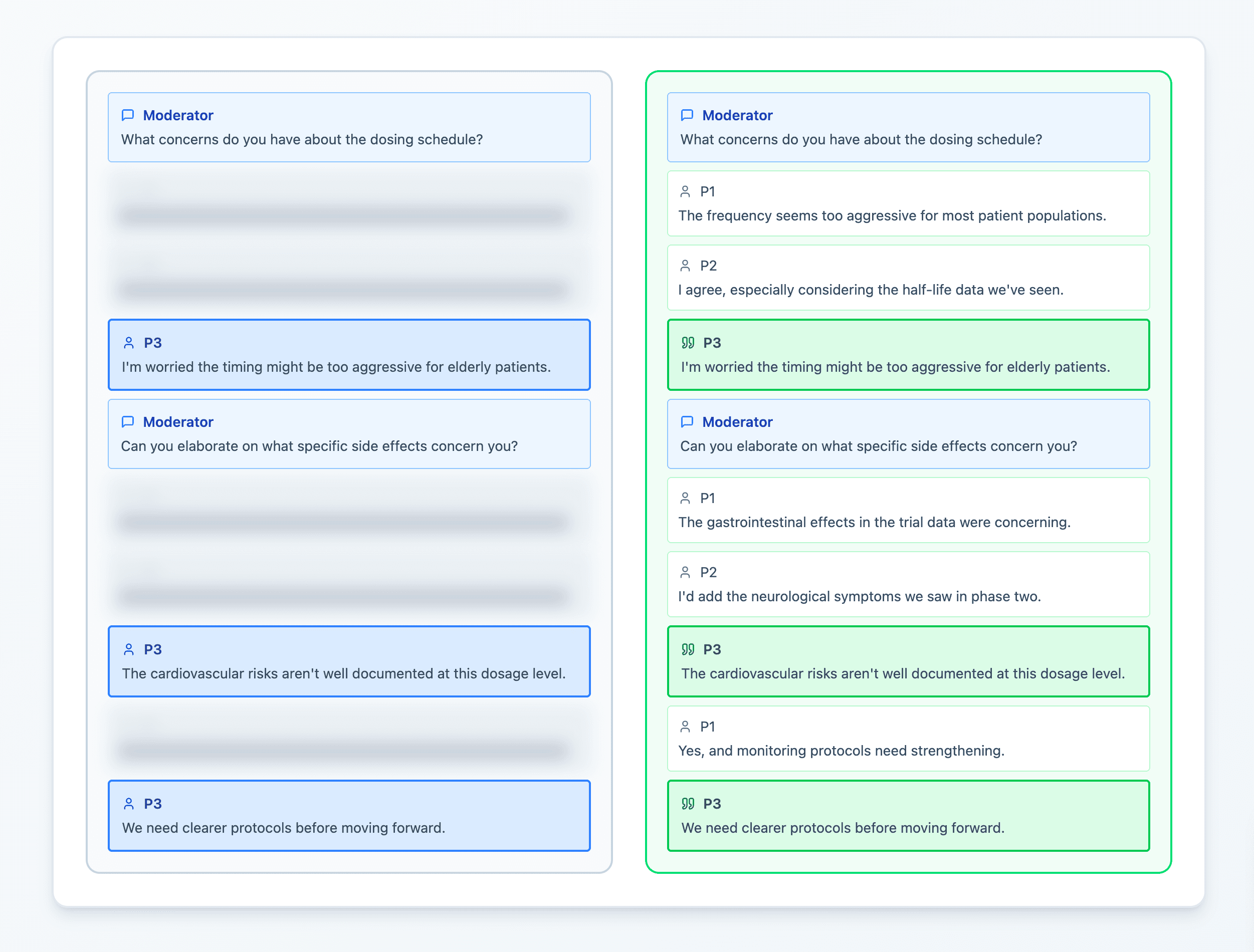
The old model did two demanding jobs at once: write a thoughtful answer, and point to the exact participant quotes that backed every claim. That's like trying to write an essay while footnoting every sentence. The longer the conversation, the more the model's attention spreads thin. Our new Thought Partner Chat splits that job into separate steps.
Now, citations consistently land where they should, you might encounter this taking a fraction longer, but rest assured — it's enabling more accuracy, not less.
2. Complete and Representative Coverage
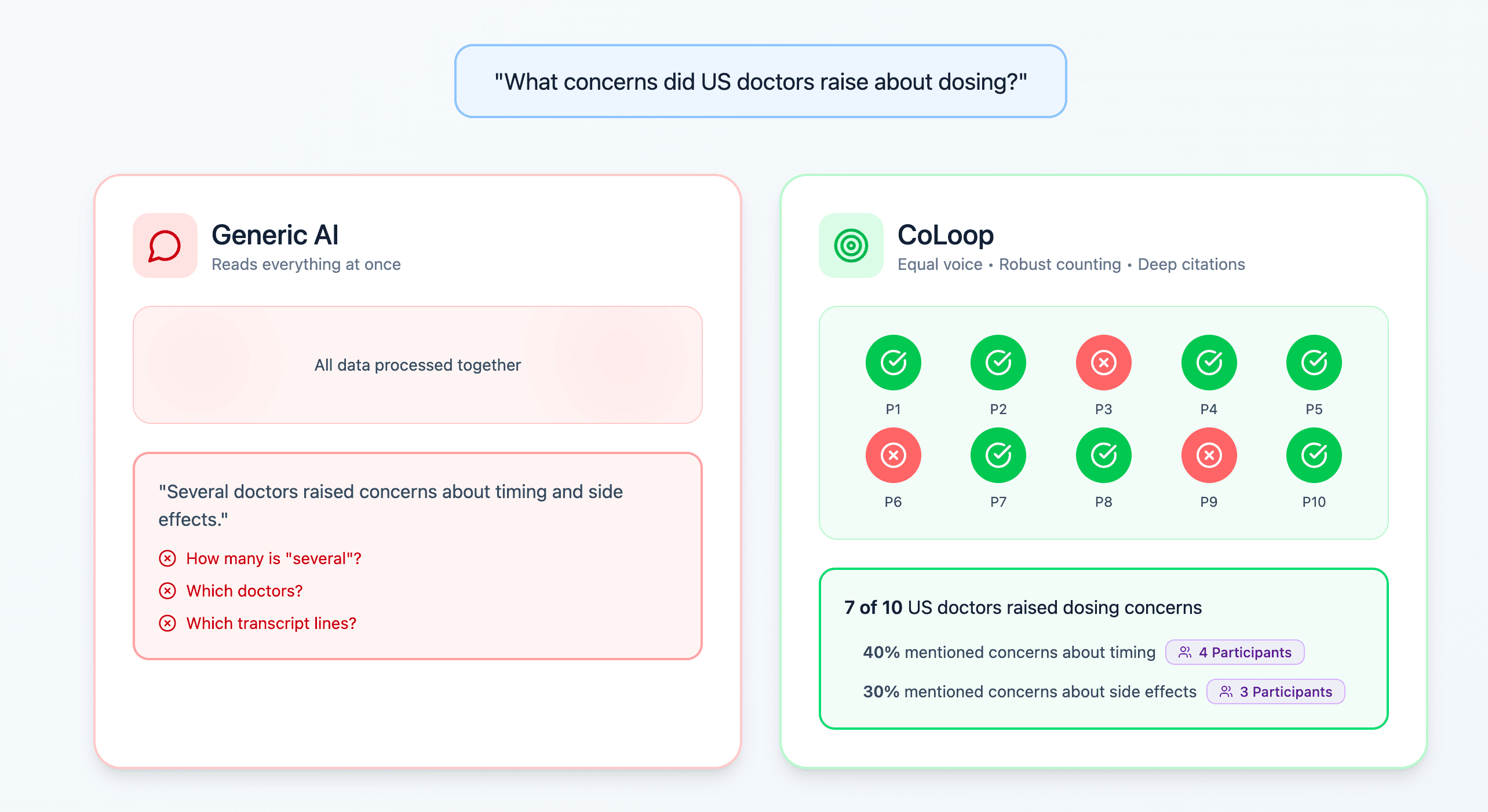
Our new Thought Partner Chat maintains a comprehensive understanding of the full dataset, surfacing a broader set of supporting evidence and distributing citations across participants. This prevents the over-indexing of just a few voices.
3. Accurate Frequency Claims
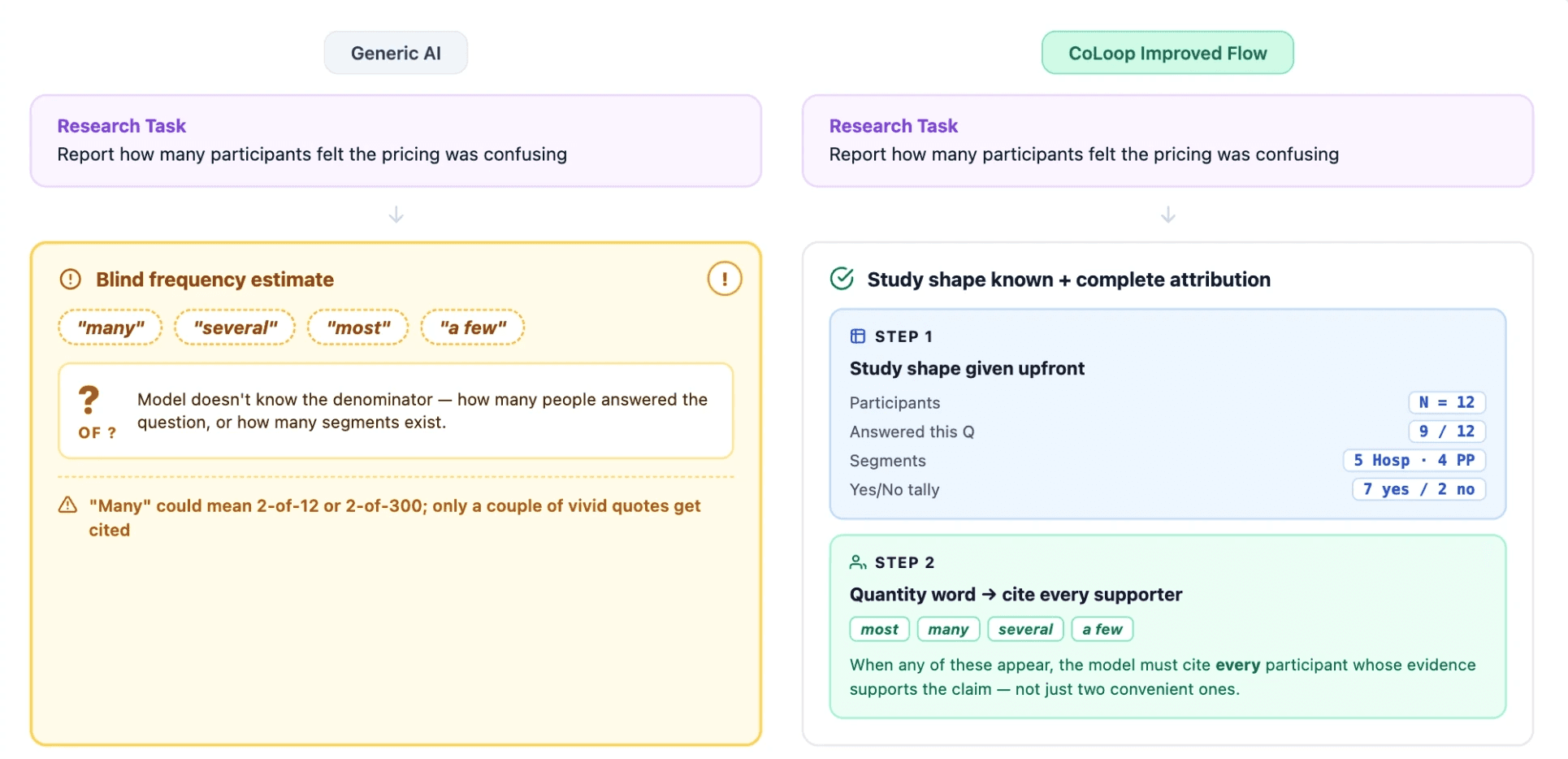
Before writing any frequency claim, the model is given the shape of the study: participant count, how many answered each question, and segment sizes. Majority claims sit comparatively: when it writes “many,” our model knows whether that’s many-of-12 or many-of-300.
4. Separate Streams for Comparisons
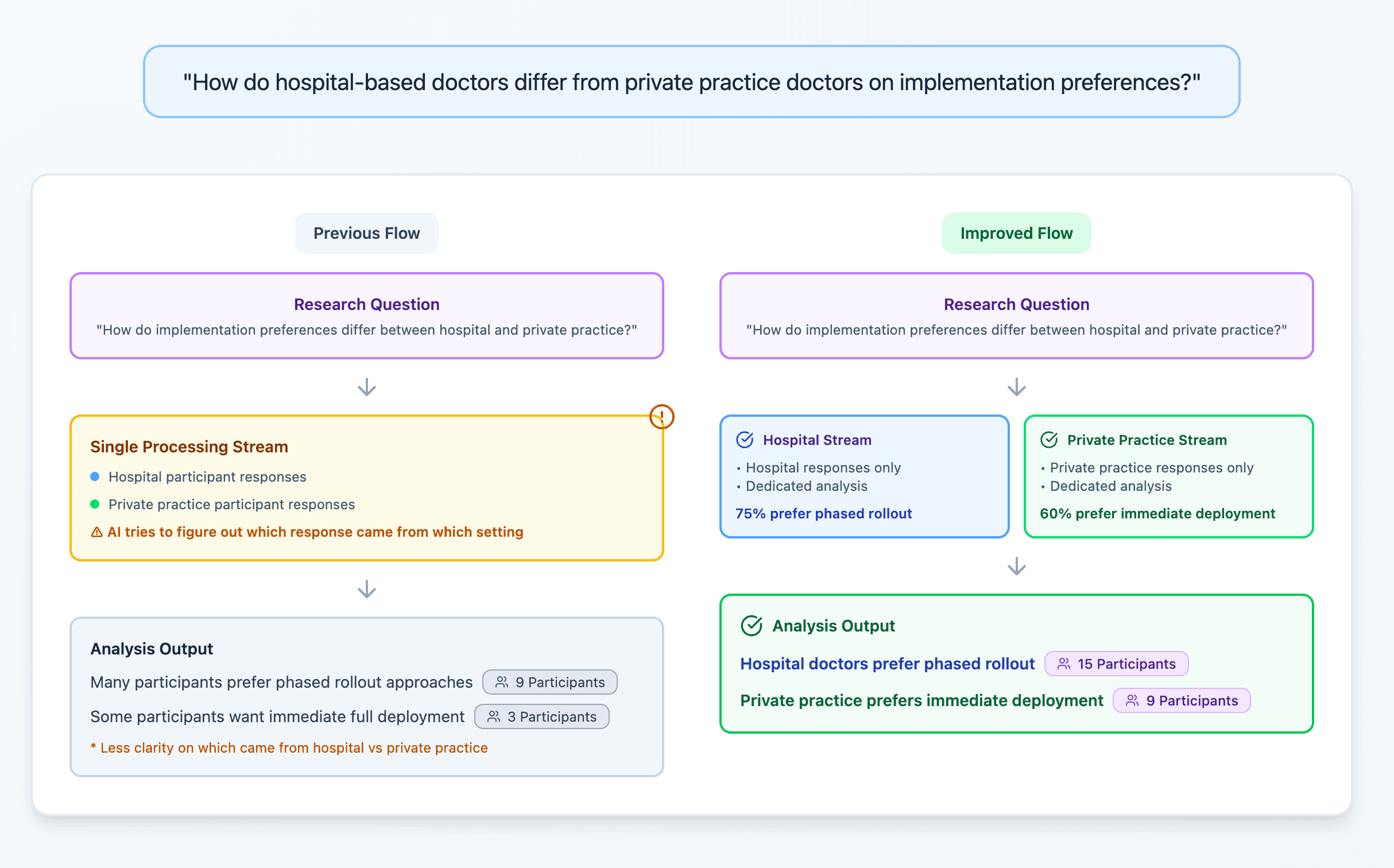
Expanding upon our learning from improving citations, our new model also separates reasoning for comparison queries. When asked to compare participant segments or concepts, Thought Partner Chat processes each group's responses in its own analytical stream rather than blending them together.
5. Transcript Section-Scoped Analysis
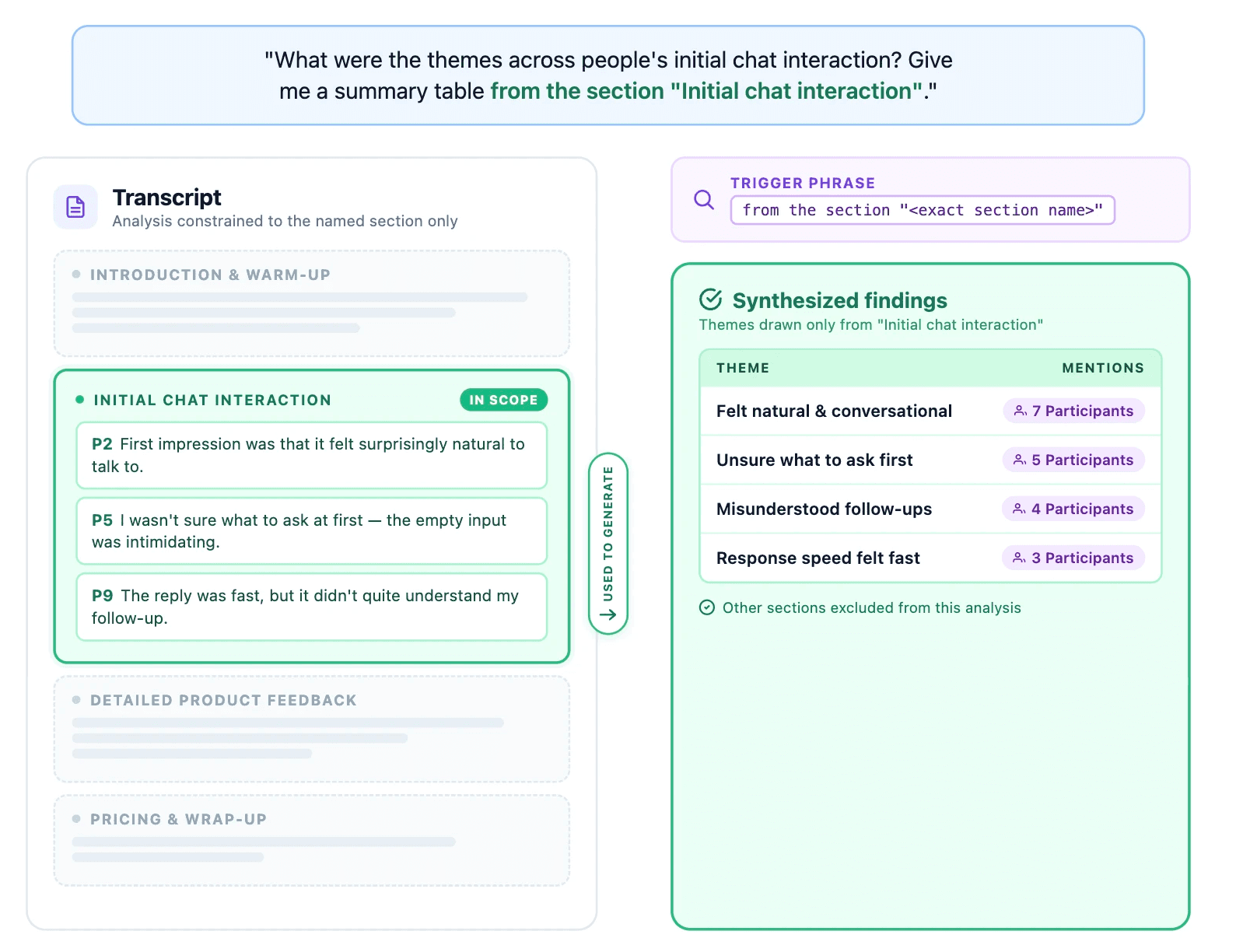
When discussion guides contain clear section headers, you can constrain Thought Partner Chat to analyze only a specific section using the “from the section” feature, followed by the exact section name in quotation marks.
Example: “What were the themes across people’s initial chat interaction? Give me the answers in a summary table and only from the section on ‘Initial chat interaction’.”
6. Deeper and more Nuanced Output
As frontier AI models push the boundaries of long-context understanding, we at CoLoop rapidly integrate those advances into our platform. Our new multimodal agent reasons across the entire transcript while analyzing each participant individually.
We ensure that detail, contradictions, and minority voices stay visible in the output.
Try it Now
The new Thought Partner Chat is live for every CoLoop user.
We are delighted to hear that early users are returning more frequently, rating it higher, and telling us it that it goes beyond the capabilities of generic AI platforms.
Open your last project, ask a question, and see the difference for yourself.